.jpg "NYCW (2)")
Closing the Forest Funding Gap: Driving Real Impact for People, Climate & Nature
New York Climate Week – 24 September 2025
Hosted by Latham & Watkins
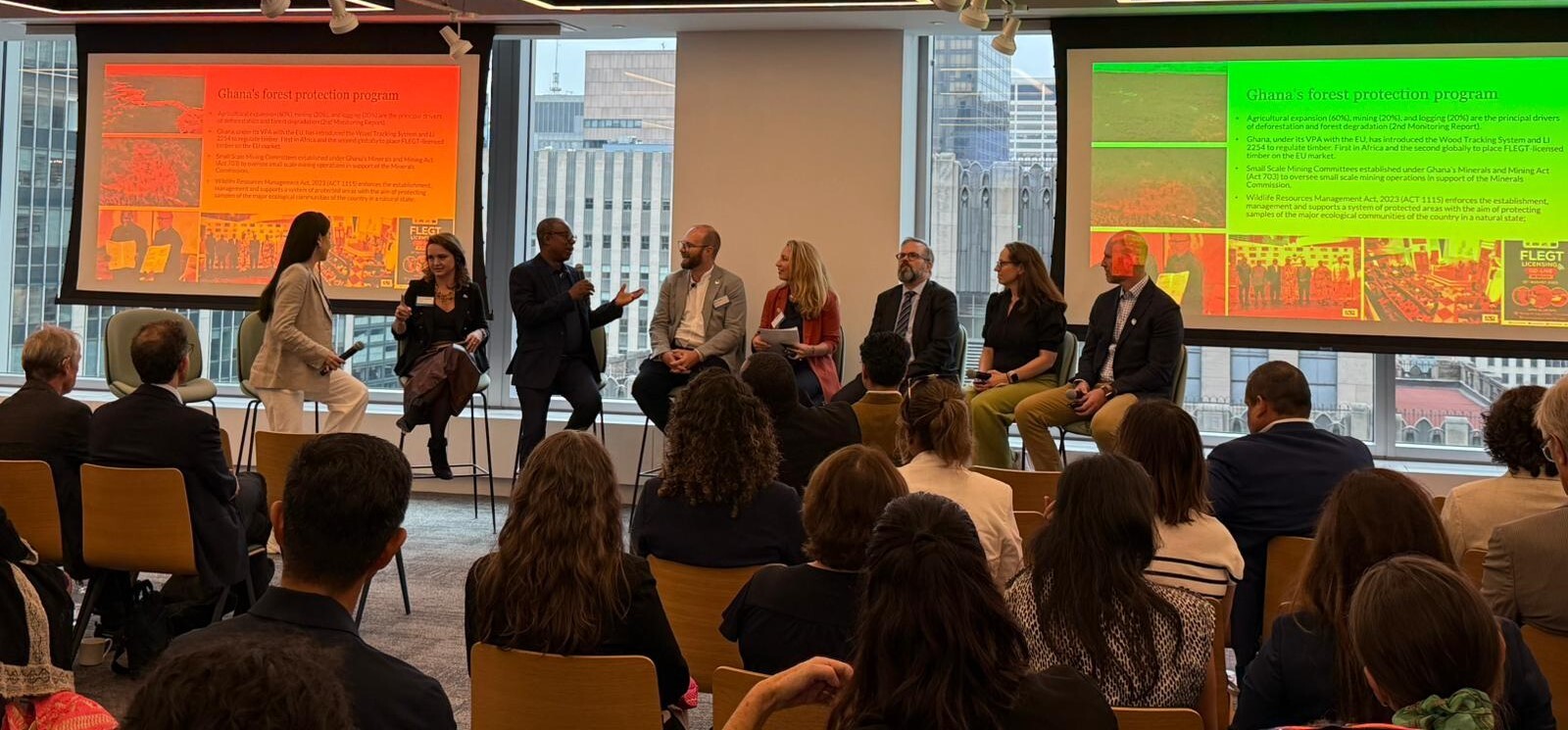
Emergent and the LEAF Coalition showed what we do best at New York Climate Week: bringing forest country leaders, Indigenous voices, corporates, donors, and civil society partners together to focus on what needs to be done to mobilize finance for large scale, government-led forest preservation programs, known as Jurisdictional REDD+ (JREDD) .
Hosted by Latham & Watkins, the session spotlighted the efforts of Ghana, Pará, and Mato Grosso to fight forest loss, paired with perspectives from Amazon, Bayer, and EY on how Jurisdictional REDD+ is integral to their climate and nature goals.
The message was clear: Collaboration and partnership between Indigenous Peoples, forest jurisdictions and corporations is essential to tackling deforestation at scale.
Powerful contributions from the Environmental Defense Fund, Alondra Cerdas Morales of the Bribri Indigenous Network and Cabécar (RIBCA), and the government of Norway underscored the collective ambition needed to protect forests, people, and planet.
Andre Aquino, Special Advisor on Economy and Environment at Brazil’s Environment Ministry, highlighted the role that Jurisdictional REDD+ programs can play alongside the Tropical Finance Forever Facility. Together, the two have the potential to provide over 50% of the finance needed to protect forests.
The event was closed by new UK Climate Minister, Katie White MP, who delivered an emotive call to action to all parties to come together and make tropical forest loss a thing of the past.
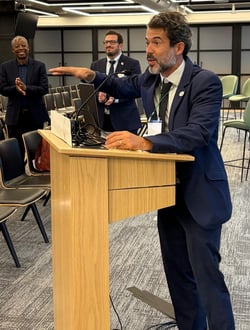
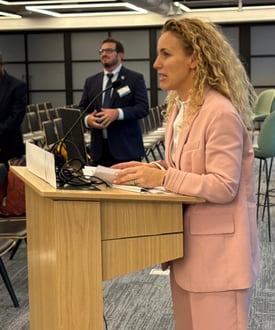
Andre Aquino
Special Advisor on Economy and Environment
Ministry of the Environment
Brazil
Katie White MP
Minister for Climate
Department for Energy, Security and Net Zero
UK Government
Key Takeouts
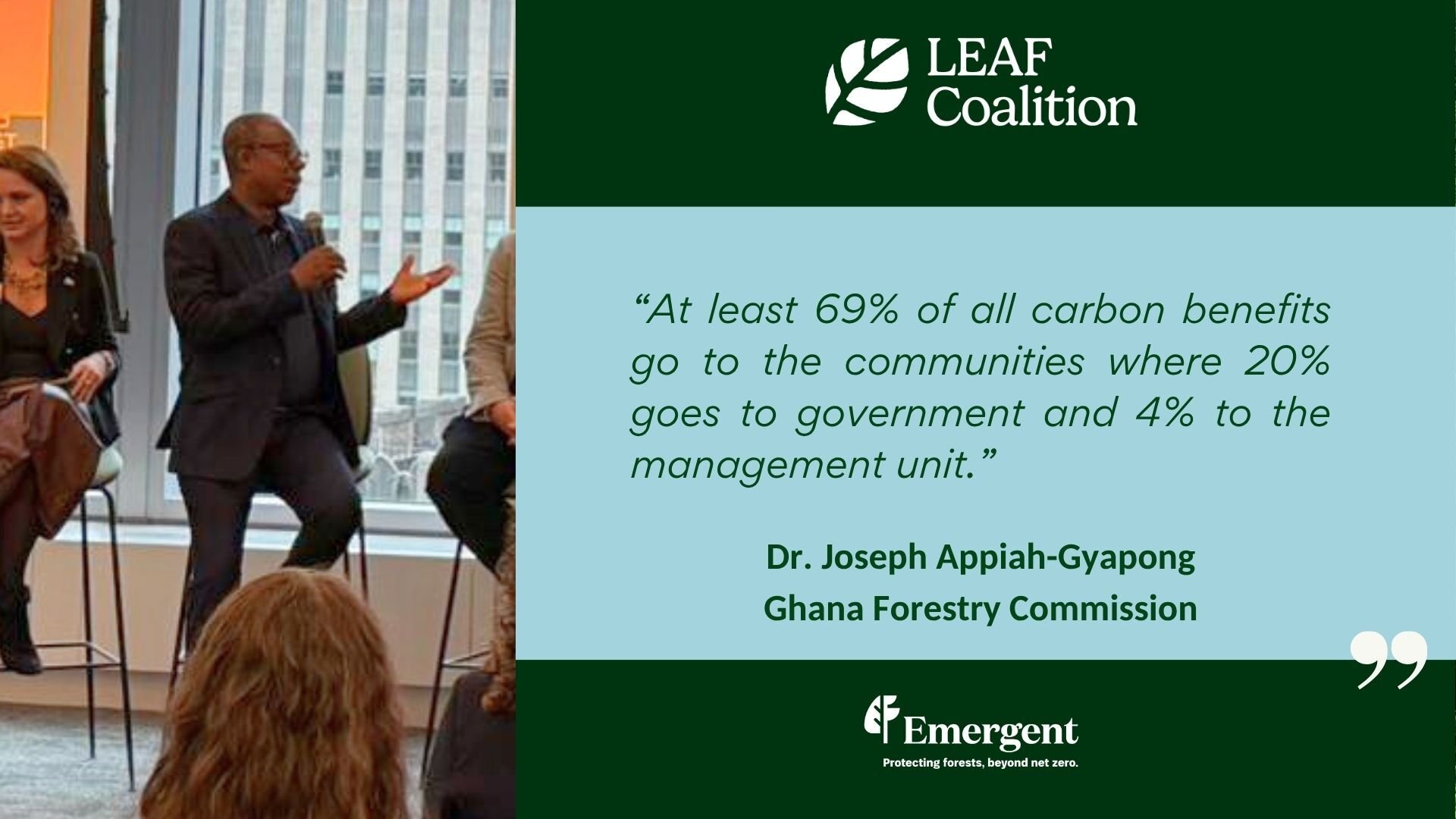
1. Ghana focuses on transparency and benefits for communities
Dr. Joseph Appiah-Gyapong of the Ghana Forestry Commission described Ghana’s frameworks to address deforestation and ensure equitable distribution of benefits.
He stressed the importance of strategic partnerships, institutional capacity and up-front finance to sustain Ghana’s pioneering program.
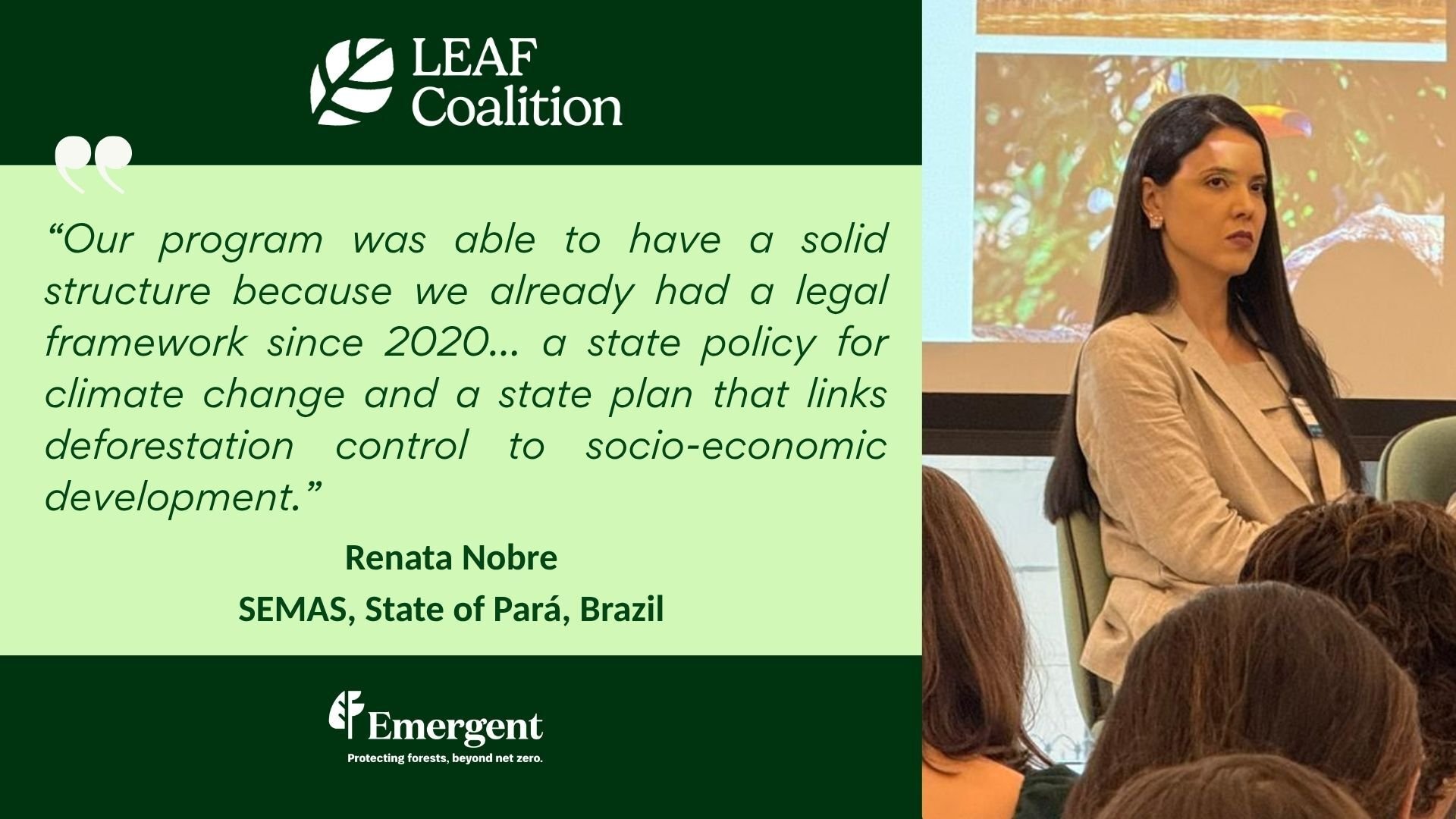
2. Pará demonstrates strong frameworks and scale
Renata Nobre, Deputy Secretary for Water and Climate Management of the State of Pará, Brazil, described how Pará has built a solid legal and policy framework for forest protection, linking deforestation control with low-emissions development through its Amazonia Agora plan.
Pará is conducting extensive Free, Prior and Informed Consultations with Indigenous peoples, Quilombolas, extractive communities and family farmers, and is positioning itself as a leader in jurisdictional approaches as it prepares to host COP30.
3. Mato Grosso seeks to reconcile conservation and production
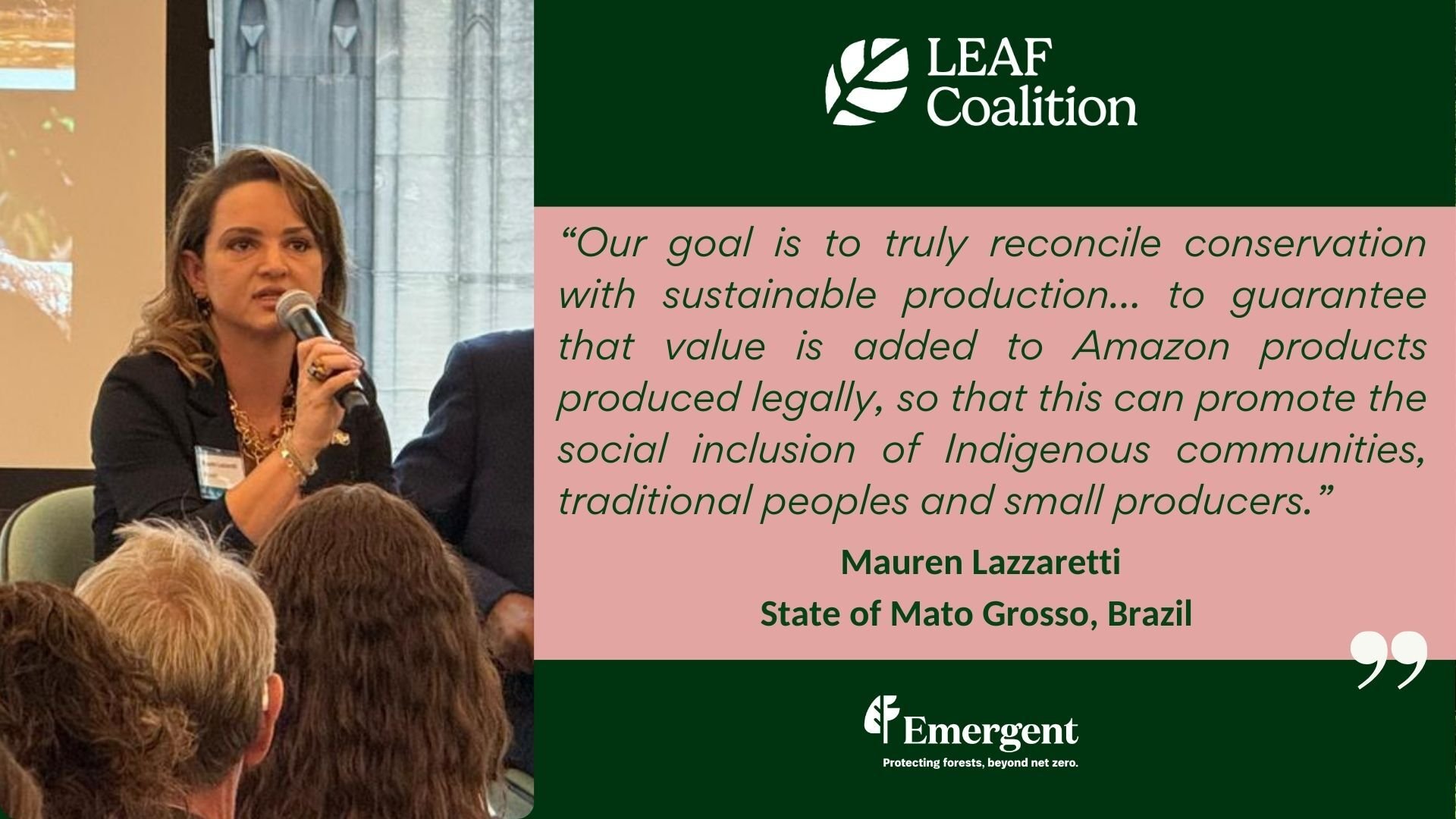
Mauren Lazzaretti, Secretary of Environment, noted that Mato Grosso has cut deforestation by 85% over the past 20 years while remaining a major producer. She stressed the state’s REDD+ programme aims to unite forest protection with sustainable livelihoods.
She emphasised that inclusivity is central, highlighting broad consultations with Indigenous and traditional communities - the largest such process in the Amazon - and called for further support for FPIC, MRV training and TREES validation.
4. Nature is a vital ally
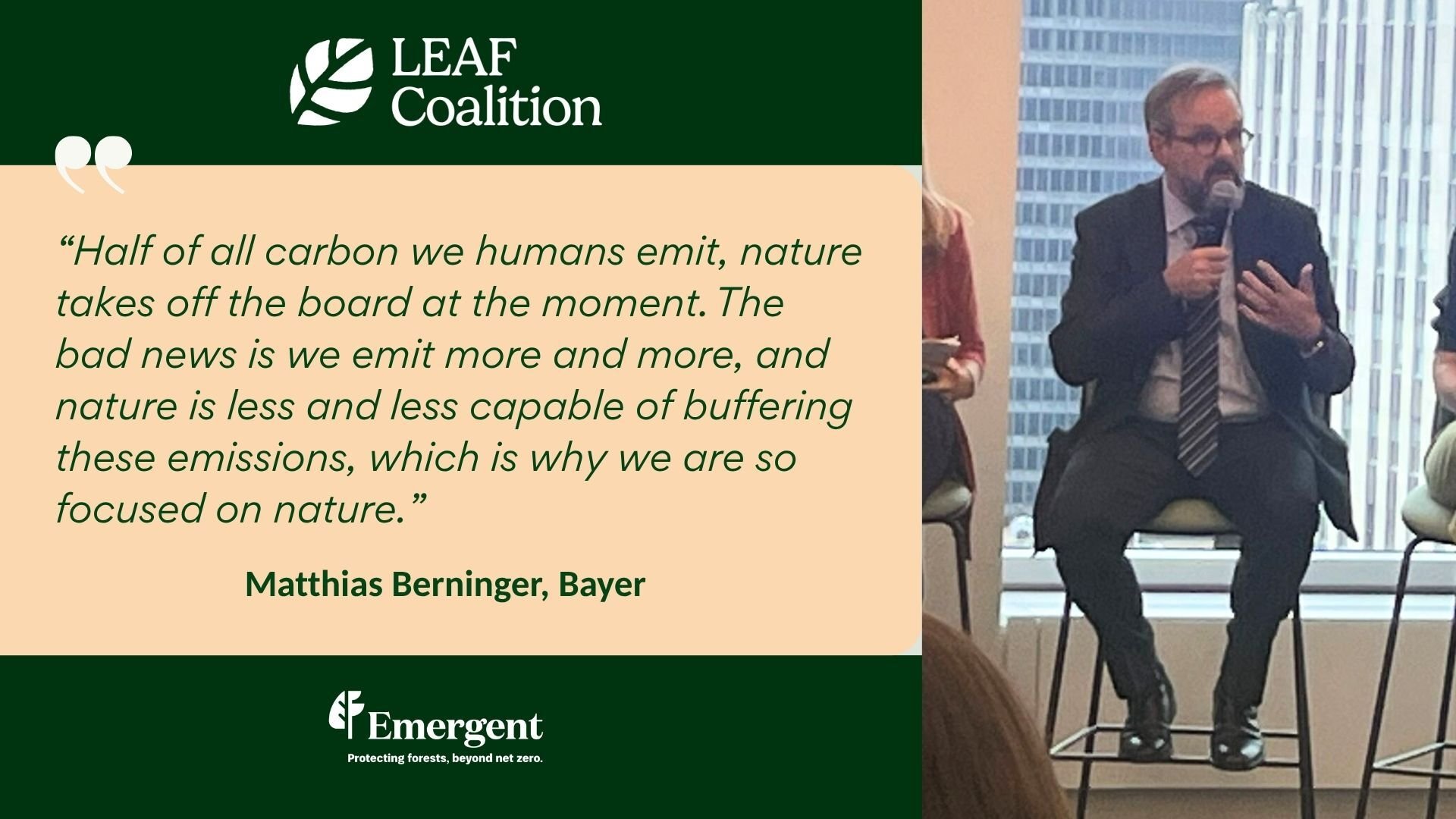
Bayer’s Matthias Berninger called on companies to focus on supporting nature while working to make value chain carbon reductions.
He specifically highlighted the vital role that nature, including forests, plays in balancing man-made carbon emissions – a role that will be further diminished without urgent action.
5. Forest protection delivers much more than tonnes
Jamey Mulligan of Amazon stressed the huge amount of work that forest countries have done to put in place local governance structures and how these are now delivering systemic benefits beyond the carbon.
He outlined examples from a recent trip to Ghana where he saw first-hand the impact in providing fresh water and funding health clinics, schools and tree planting programs.
.jpg?width=1920&height=1080&name=Jamey%20Mulligan%20%20(1).jpg "Jamey Mulligan (1)")
6. Companies recognize their impact on nature
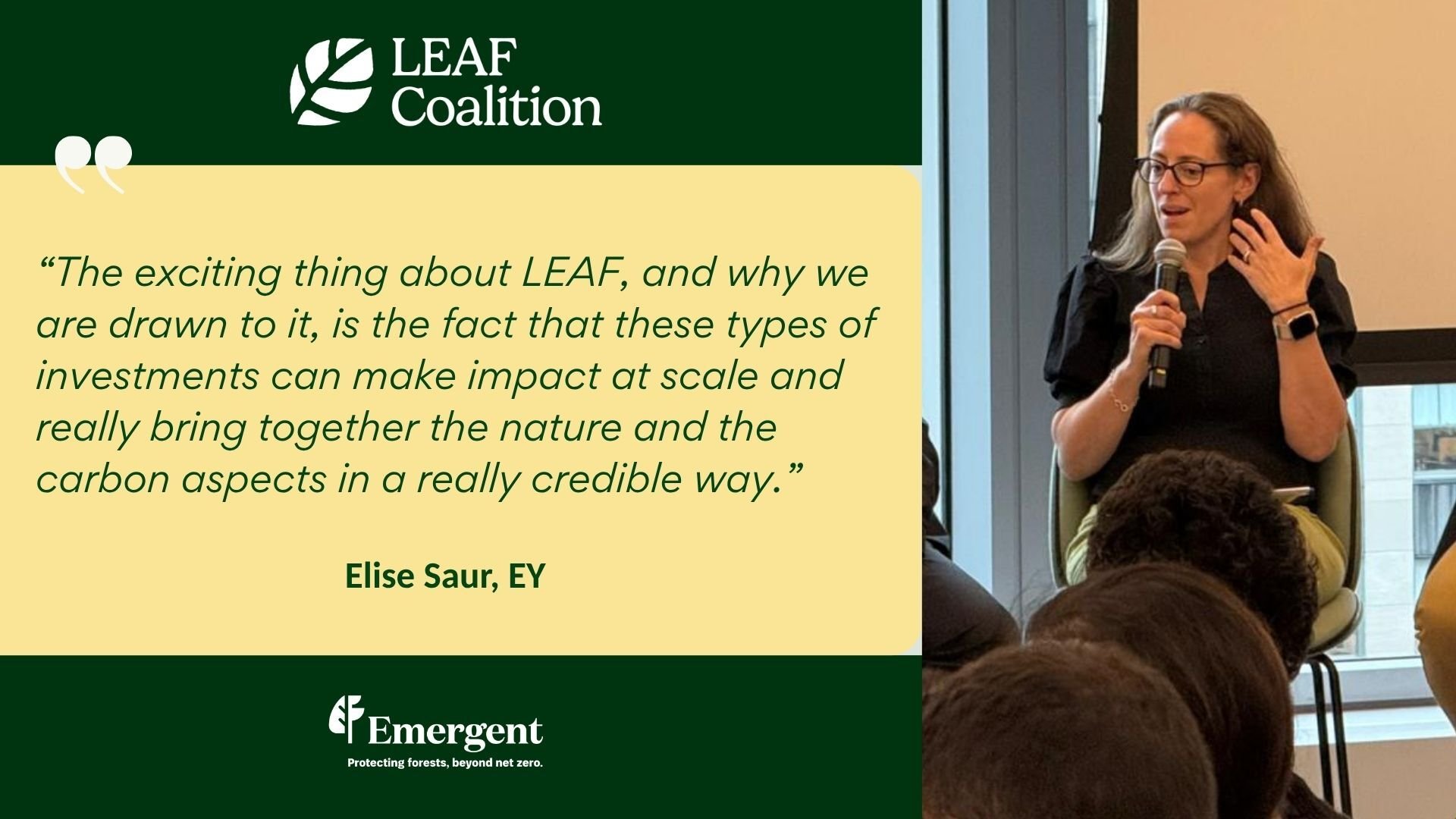
Elise Saur of EY underlined that EY recognizes the impact its business has on nature and the need to make credible investments that deliver benefits at scale to complement the company’s net zero goal.
Elise also emphasized that as a company with a specialism in auditing, EY is drawn to the credibility and integrity that the Jurisdictional REDD+ model brings.
7. Indigenous leadership is central to success
EDF underlined that less than one percent of climate finance reaches Indigenous peoples and local communities, making benefit-sharing mechanisms crucial for trust. Santiago García stressed that traditional knowledge must guide solutions.
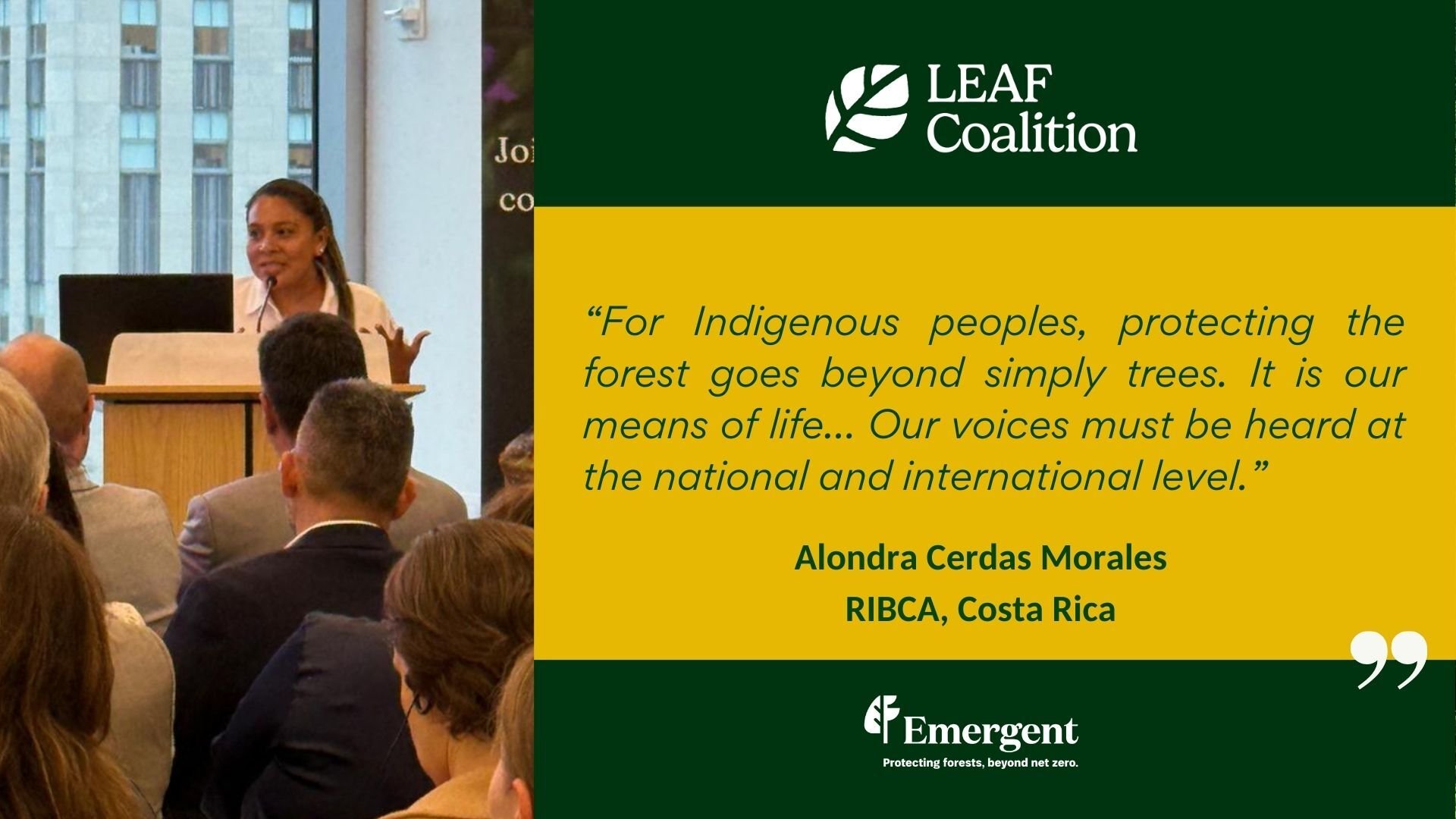
Alondra Cerdas Morales, President of RIBCA in Costa Rica, spoke from experience, highlighting the central role forest plays in traditional ways of life and calling for Indigenous voices to be heard.
8. Urgency and scale is vital
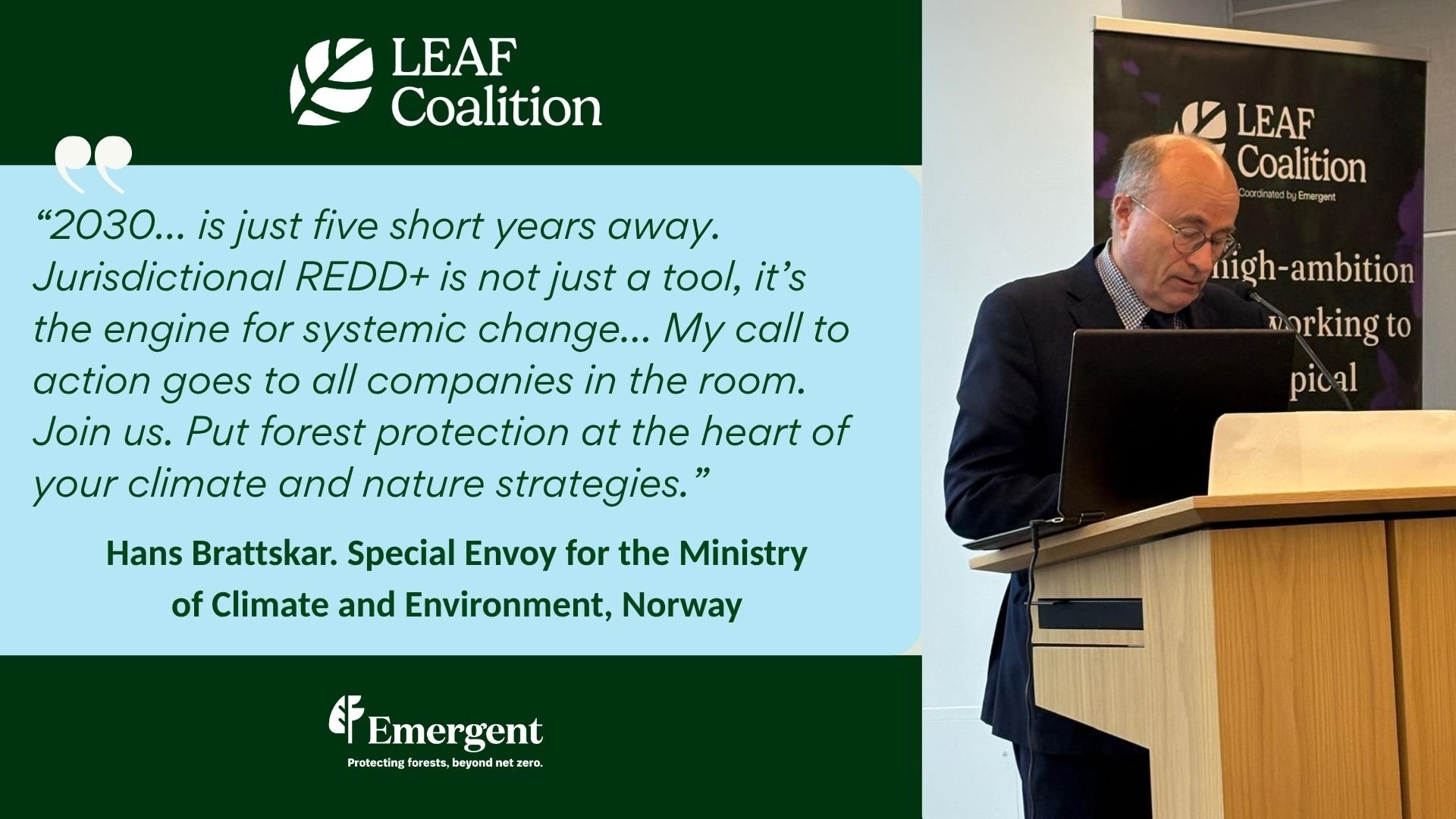
Hans Brattskar, Special Envoy for the Ministry of Climate and Environment of Norway, reminded participants of the decisive decade ahead and the need for all to take action to drive impact at pace and scale.
The session made clear that Jurisdictional REDD+ is advancing strongly, with Ghana, Pará and Mato Grosso showing what credible, inclusive programs look like in practice. Corporate leaders emphasized the need for integrity and systemic impact, while Indigenous and civil society representatives reminded participants that protecting forests means protecting lives and cultures.
With COP30 in Belém - the first “COP in the forest” - fast approaching, now is the time to build on this momentum by putting forest protection at the heart of corporate climate and nature strategies to drive impact for people, planet and nature.
If you are a forest government or corporate business interested in learning more about Emergent and the LEAF Coalition, and our mission to end tropical deforestation, please reach out for more information: info@emergentclimate.com.