
Progress for Forests at COP30
COP30 – Growing Momentum for Forests
Brazil placed forests at the centre of the global climate agenda by hosting COP30 in Belém. Here are the four global developments shaping forest action going into 2026:
1. Tropical Forests Forever Facility (TFFF) launched
President Lula announced the TFFF at the Leaders’ Summit with $5.3B committed by 50+ countries. Once fully operational, the Facility aims to mobilise $125B to protect over 1B hectares across 70+ developing countries.
2. Scaling JREDD+ takes centre stage
The Scaling J-REDD+ Coalition launched on Nature Day with governments, Indigenous Peoples, companies, investors, standards bodies and civil society. Together with the TFFF, JREDD+ now represents over 50% of the global forest finance needed to meet climate and nature goals, as identified in the Forest Finance Roadmap released by 34 governments at New York Climate Week.
3. New global Call to Action on wildfires
Over 50 signatories backed the COP30 Call to Action on Wildfires, shifting focus toward prevention, preparedness and resilience.
4. Major progress on land tenure
Fourteen tropical forest nations committed to secure or strengthen land rights for Indigenous Peoples and local communities across 80 million hectares by 2030, supported by $1.8B (2026–2030) in new finance from the Forest Tenure Funders Group.
LEAF @ COP30
Major Progress Announcements
Emergent and the LEAF Coalition contributed to the momentum at COP30 through a series of major developments.
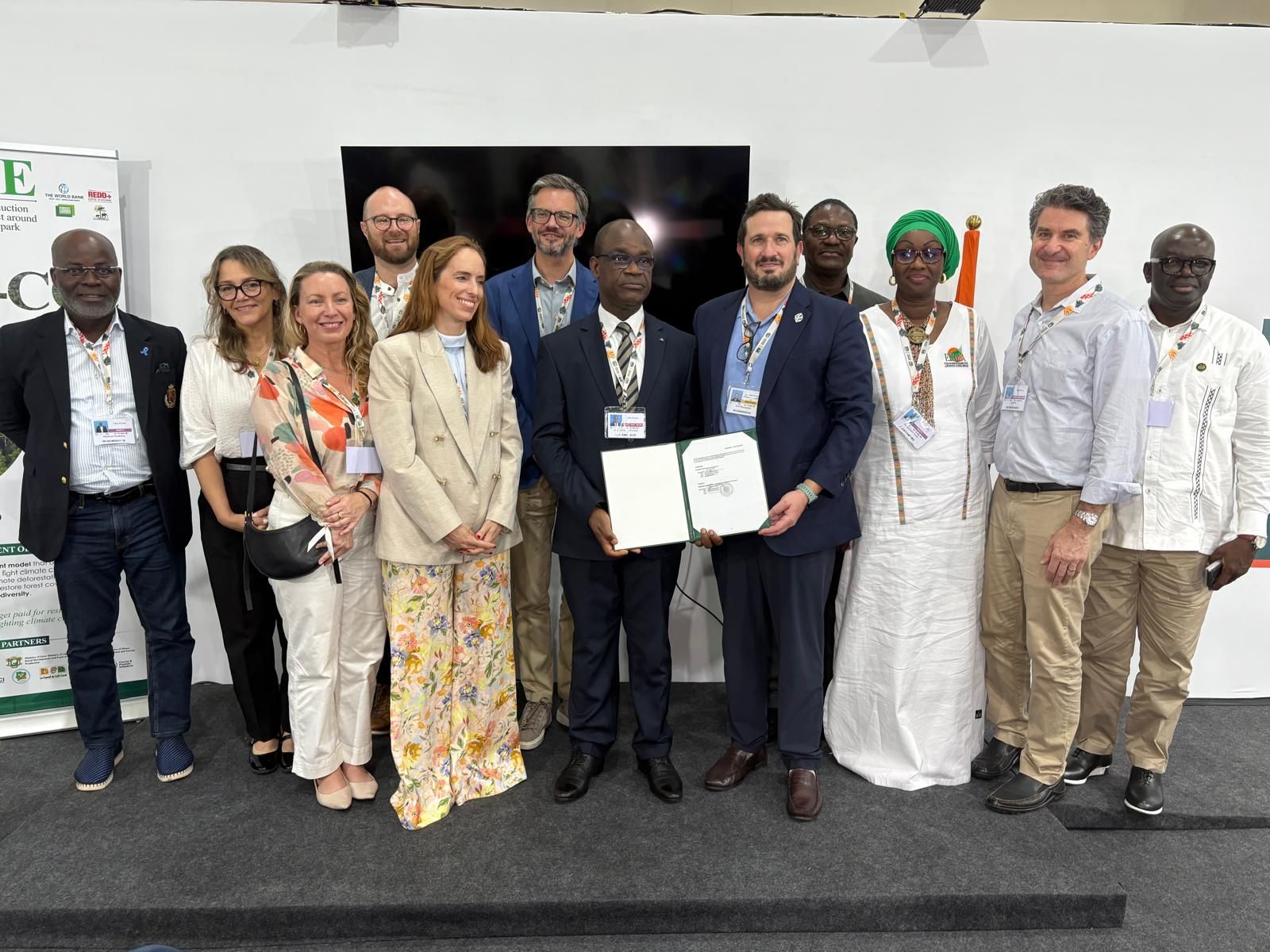
1. New Deal: Côte d’Ivoire signed landmark agreement
Côte d’Ivoire signed an agreement with Emergent to receive up to $23M from the sale of high-integrity jurisdictional emissions reductions generated through the World Bank’s FCPF programme.
Approximately 75% of revenues will flow directly to local communities and forest agencies under an existing FCPF benefit-sharing plan.
The country’s JREDD+ programme covers almost 5M hectares in the cocoa belt, including the Taï National Park UNESCO Biosphere Reserve. It promotes sustainable agroforestry, alternatives to wood energy, stronger land tenure and the protection of remaining forests.
These credits are issued and now available to transact with buyers through Emergent providing companies with a credible way to take action for climate, people, and nature
2. New Market Demand: Tencent joins LEAF
Technology and entertainment business Tencent became the first Asia-based corporation to commit to LEAF, growing the global buyer footprint.
Right: Andy Yu, Carbon Markets & Nature Finance Lead, Tencent, highlighting their decision to join the LEAF Coalition at the COP30 High-Level Solutions Dialogue on Forest Finance on the Road to 2030.

.jpg?width=2000&height=1500&name=Matto%20Grosso%20LOI%20(2).jpg "Matto Grosso LOI (2)")
3. Advancement of Mato Grosso and Goiás
Mato Grosso and Goiás signed agreements to advance the commercialisation of high-integrity JREDD+ credits through LEAF, following Pará’s agreement earlier last year for up to $180M.
Left: Mauro Mendez, Governor (right) and Mauren Lazzaretti State Secretary for the Environment (left) both of Mato Grosso with Emergent’s Andrea Azevedo (center)
4. New LEAF Jurisdiction: Dominican Republic
The Dominican Republic also became the first Caribbean nation to have a proposal accepted to join the LEAF Coalition, opening the opportunity to transact emissions reduction credits with global buyers and channel climate finance to forest preservation.
Spotlight: Jurisdictional REDD+ in Pará
As hosts of COP30, the Government of Pará showcased the progress of its jurisdictional forest protection programme. Watch the GloboNews segment featuring Governor Helder Barbalho and Andrea Azevedo of Emergent discussing Pará’s partnership with LEAF. We extend our thanks to the Government of Pará for two productive weeks in Belém and for their continued leadership in advancing high-integrity JREDD+.
Hear more from Andrea in her recent article with renowned Brazilian Climate Scientist Carlos Nobre on the importance of scaling JREDD for Brazil: Um novo pacto pelo fim do desmatamento.
On the Ground in Belem
Jurisdictional REDD+ featured at COP30 in a big way, with events and convenings with governments, Indigenous organisations, NGOs and the private sector across the COP Blue Zone and beyond. Here are some key moments for our Emergent and LEAF Coalition Partners:
Convening the LEAF community
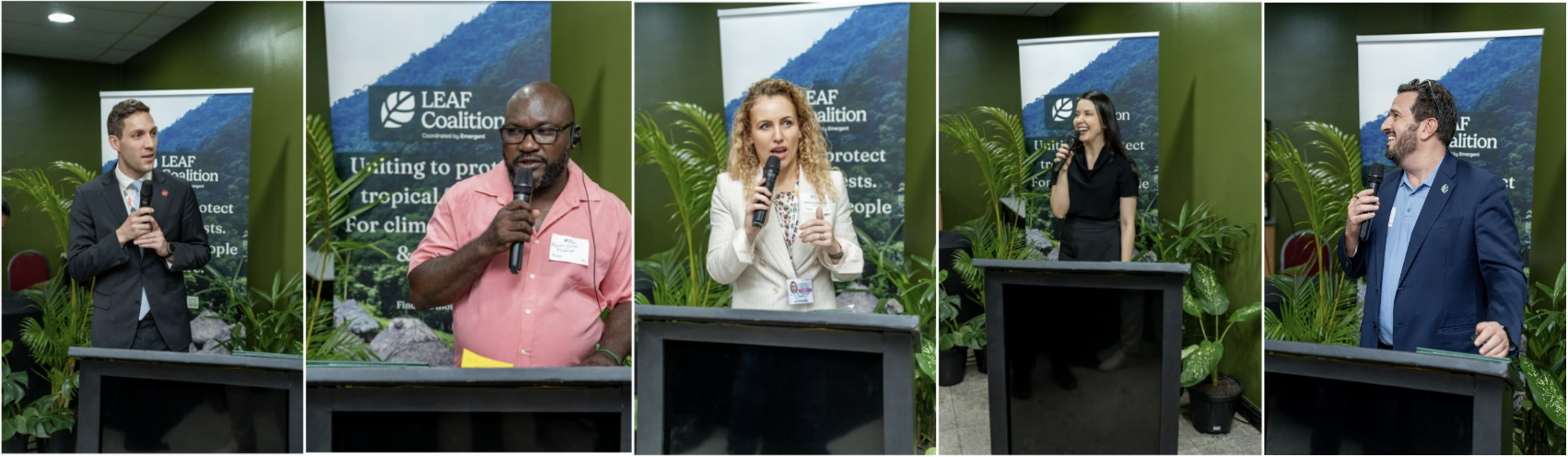
Over 100 stakeholders joined a reception hosted by Emergent CEO Eron Bloomgarden, featuring remarks from: Katie White, MP, UK Minister for Climate and Environment; Andreas Bjelland Eriksen, Norwegian Minister of Climate and Environment; Deputy Secretary for Water and Climate Management of the State of Pará, Renata Nobre and Malungu director Aurélio Borges, a lawyer and member of Quilombo Macapazinho in Pará, Speakers reaffirmed their commitment to LEAF and the urgent need to scale finance for forests.
Brazil & Mexico jurisdictional leadership
Rocio Sanz Cortes joined the GCF Task Force panel highlighting state-level JREDD+ progress.
Deforestation-free supply chains
Edwina McKechnie joined a PCI Institute roundtable with the Government of Mato Grosso on how JREDD can support sustainable production efforts.
Indigenous and local community leadership
Carol Burga spoke at the COP30 Nature Pavilion on the critical role of IPLCs in high-integrity carbon markets.
Market opportunities for JREDD+
Eric Pitt joined a discussion at the Consórcio Amazônia Pavilion on growing domestic and international market opportunities.
Delivering social safeguards and integrity
Andrea Azevedo led a panel with Conservation International on IPLC-centred programme design.
Earthshot innovation & community-centred design
Eron Bloomgarden hosted a dialogue with past and present Earthshot Prize winners.
Scaling forest finance through partnerships
Sean Frisby joined a COP Presidency Action Agenda session co-hosted with WWF to showcase progress under the LEAF Coalition and the Forest Forward Initiative.
-1.png "Untitled design (3)-1")
Voices & Views
COP30 brought together a wide range of stakeholders focused on tackling deforestation. Here are some of the interesting views we heard on the urgent need to protect forests and the role of jurisdictional REDD+.

“JREDD is the best way to deliver high integrity trustworthy results that minimise leakage” - Maggie Charnley, Head of the UK government's International Forests Unit

"If we think about JREDD, the future of it, the core of it is putting people who have protected the forest for centuries at the forefront…. It must include respect for IP&LCs. Governance and process inclusion and acknowledgement of our territories we have managed for centuries.” - Francisco Souza, Senior Vice President, Indigenous Peoples and Local Communities, Conservation International

“Why did we get into JREDD? We decided it was safer, we decided to go into dialogue, in the case of Pará...we decided to use our efforts to have people hear us - we as committed Indigenous Peoples, Extractivists, Quilombolas, Family Farmers. In Pará, we decided to discuss all points with our society. We had trainings, consultations, we wrote our ideas down.” - Atanagildo de Deus Matos “Gatao” (National Council of Extractivist Populations - CNS)

"We know the challenges are real, but we also know that never before has there been so much knowledge and technology available, and so much financial innovation ready to be adopted. We need a global ‘mutirão’ to 2030 - tropical forest countries bringing experience and ambition, financial institutions and companies, and IP&LCs as protagonists and direct beneficiaries.” -João Paulo Capobianco, Deputy Minister of the Environment and Climate Change of Brazil

“Protecting the world's forests is one of the smartest moves we can make. UNEP's “High-Risk Forests, High-Value Returns” report shows benefits from forest protection - 91M jobs, 500M tonnes of sediment prevented from clogging rivers. Few actions offer such a powerful return for people nature and planet.” - Martin Krause, Director of the Climate Change Division, UNEP

"I can’t overstate how important public–private finance is for minimising risk. To build credibility and trust, we need full transparency and clear, measurable deforestation commitments. It’s essential that we track deforestation and biodiversity risks across our supply chains and understand how these risks can negatively impact development.” - Katerina Papavasileiou, ESG & Responsibility Director, Federated Hermes at the high-level Solutions Dialogue on Forest Finance on the Road to 2030 at COP30
Top COP News
There were a lot of headlines before, during and after COP30. We have distilled our top summary articles on climate finance, nature and forests.
- No roadmap to end deforestation, but Brazil’s COP in the Amazon delivered for forests | Reuters
- What was achieved for Indigenous peoples at COP30?
- COP30 Debrief: What Really Happened for Carbon Markets in Belém
- COP 30 Delivers Progress — But Seems to Have Missed Its Moment - Nature4Climate
- COP30: Momentum grows behind carbon markets as a climate solution | Reuters
- COP30: Key outcomes for food, forests, land and nature at the UN climate talks in Belém - Carbon Brief
- Um novo pacto pelo fim do desmatamento - Carlos Nobre and Andrea Azevdeo - Emergent
Policy Update
Keeping track of policy developments can be challenge, so here are some bitesize digests on the need-to-know policy news from COP30 and beyond:
SBTi: The Science Based Targets initiative (SBTi) has opened a second public consultation on its draft Version 2 of the Corporate Net-Zero Standard, and invites feedback by 12 December 2025. This is a timely opportunity for companies to influence a standard that will shape corporate net-zero pathways globally - your voices can help ensure the final Standard is both credible and fit for real-world implementation.
The Coalition to Grow Carbon Markets released its first two documents: the Shared Principles and a corresponding Plan of Action, both aimed at strengthening credible corporate use of high-integrity credits. The expanding group of participating governments and their commitment to align policies with these principles could give the Coalition more impact than isolated national efforts. The Coalition, launched in June 2025 at London Climate Action Week, was founded by France, Kenya, Singapore, the UK, and Panama.
Before you go
COP30 placed forests firmly in the global spotlight — but sustaining this momentum is essential if we are to halt and reverse tropical deforestation. We are proud of the progress made this year across the LEAF Coalition, and equally aware of the urgent need to continue scaling action.
To learn more or join LEAF, visit www.leafcoalition.org or contact info@emergentclimate.com.