
The Role of Jurisdictional REDD+ in Supporting Indigenous Peoples and Local Communities in Brazil
Co-hosted by the Natural Climate Solutions Alliance (NCSA) and Emergent
Emergent and the Natural Climate Solutions Alliance (NCSA) brought together leading voices from across Brazil’s climate and forest landscape to explore how Jurisdictional REDD+ (JREDD) can protect forests at scale while placing Indigenous Peoples and Local Communities (IP&LCs) at the center of action.
For the webinar, Emergent convened Brazilian Indigenous and community leaders and state government representatives to discuss how robust governance, transparent benefit-sharing, and meaningful participation can ensure lasting impact for people and nature.
Speakers shared insights from Brazil’s pioneering jurisdictional programs in Acre, Mato Grosso and Pará, highlighting the country’s progress towards developing inclusive forest protection strategies. The discussion underscored the importance of direct community access to finance, territorial protection, and equitable collaboration between governments, Indigenous organizations, and international partners as the world looks ahead to COP30 in Belém in the heart of the Amazon.
Watch the recording and read our key takeouts below:
Key Takeouts
1. JREDD is a crucial instrument to channel finance where it’s needed most
Speakers agreed that JREDD provides a vital mechanism for climate finance to reach the front lines of forest protection — helping strengthen public policies, local governance, and sustainable economies in forest territories.
2. JREDD+ empowers communities to protect biodiversity and their territories
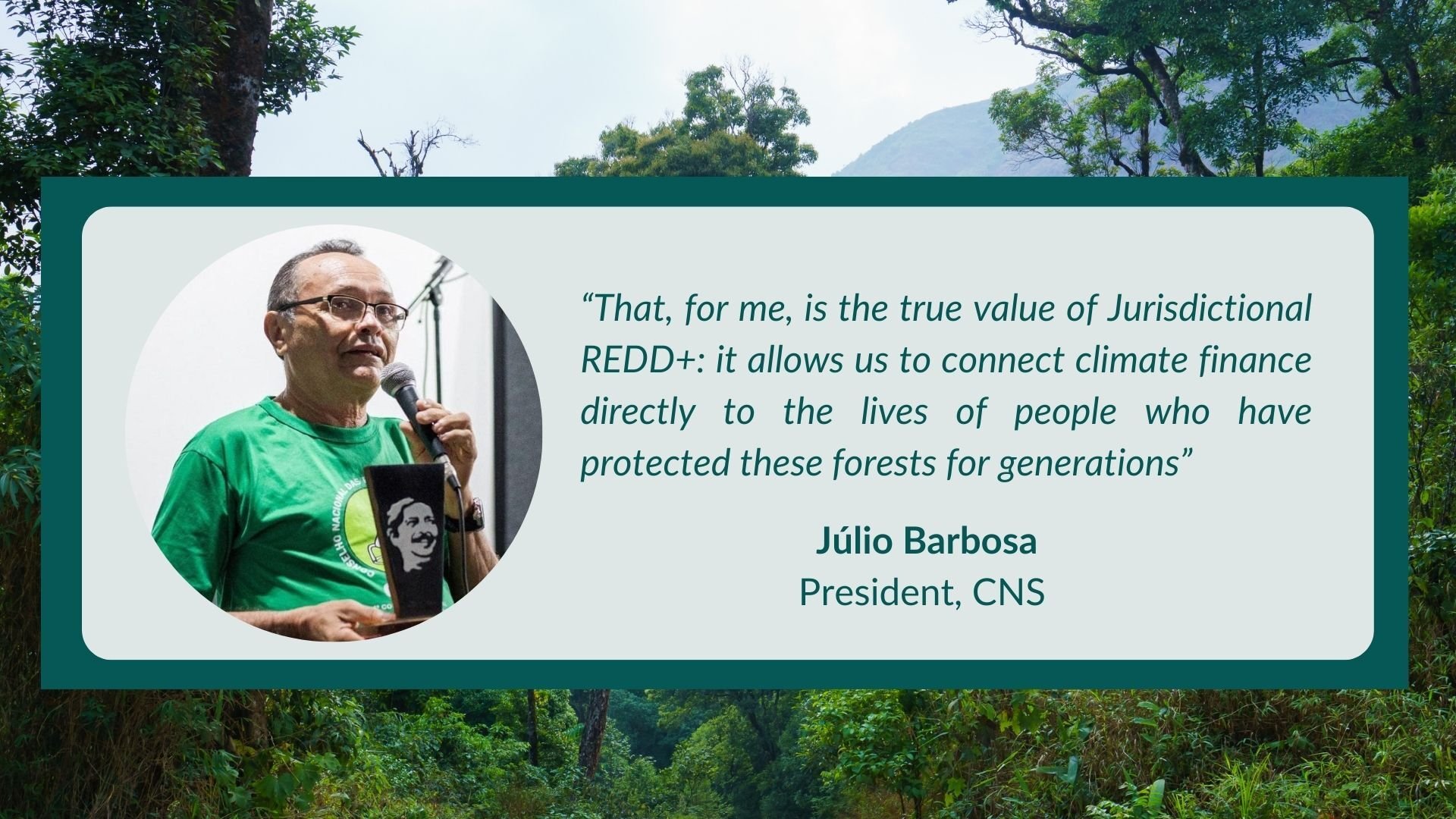
Jurisdictional REDD+ strengthens local capacity to manage and monitor forest territories — not only delivering carbon benefits but also safeguarding biodiversity and sustaining livelihoods.
3. JREDD builds on a foundation of forest guardians’ leadership
Brazil’s leadership in inclusive forest governance is rooted in decades of mobilization by traditional and Indigenous communities. The JREDD framework is not emerging in isolation, but as the continuation of the legacy of movements led by figures like Chico Mendes and the Extractivist communities of Acre.
.jpg?width=1920&height=1080&name=J%C3%BAlio%20Barbosa%20(2).jpg "Júlio Barbosa (2)")
4. Built from the ground up: full participation is essential to design programs that reflect local realities
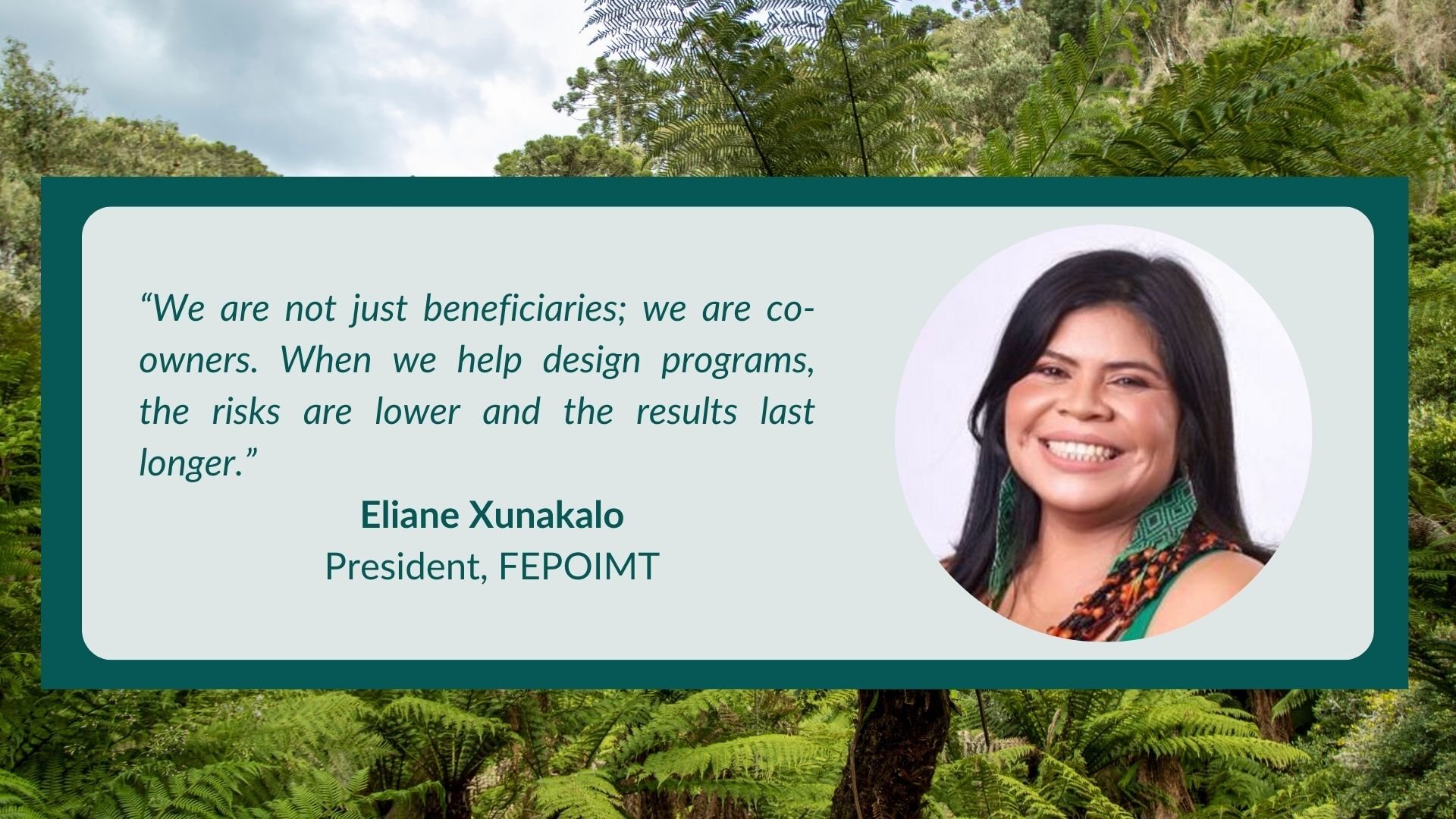
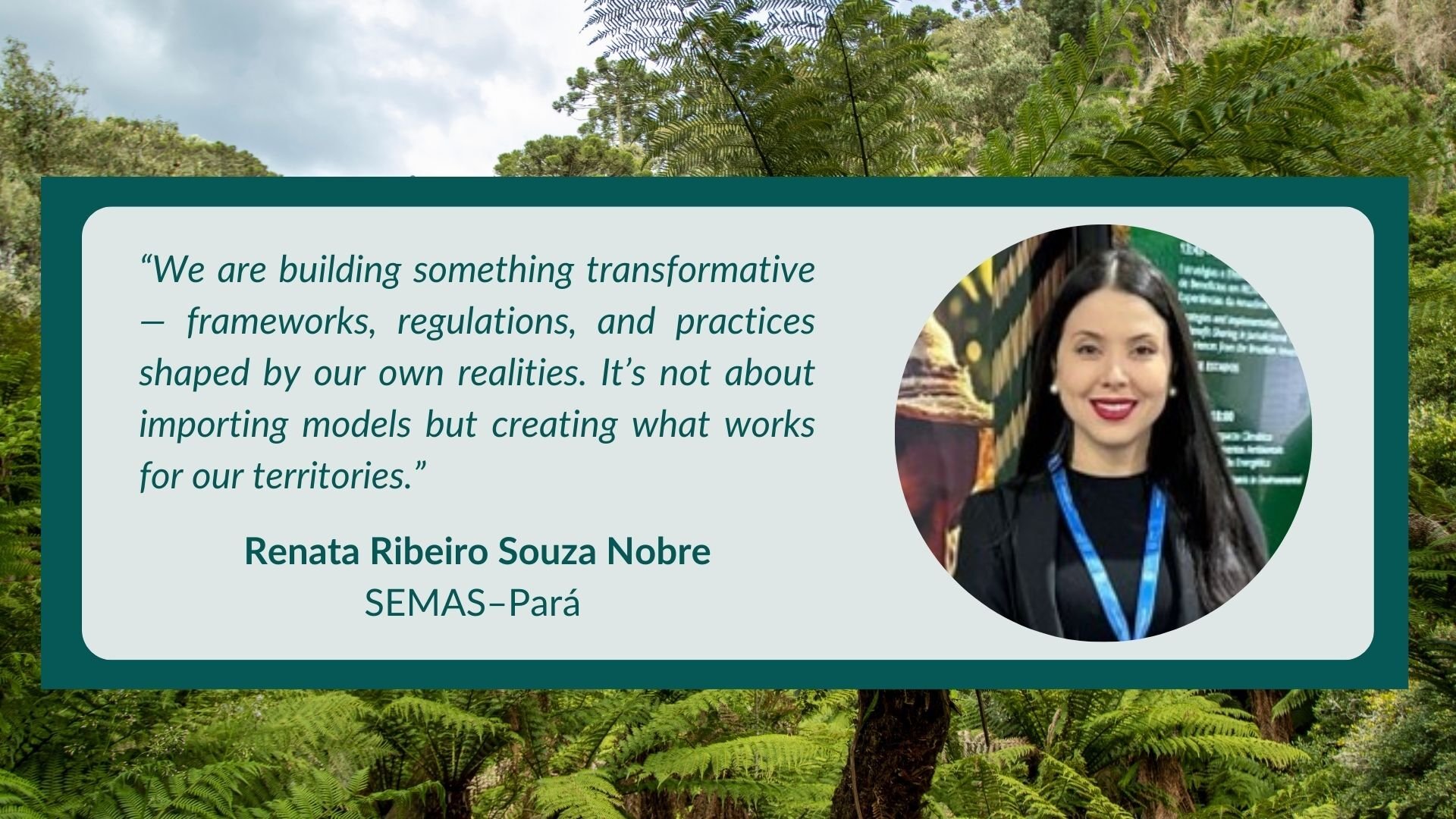
Speakers emphasized that jurisdictional programs must be designed from the ground up — shaped by the social, cultural, and ecological realities of each territory. This requires full participation of Indigenous Peoples and Local Communities from the start, as co-creators and decision-makers, not just beneficiaries.
5. Governance and transparency are at the heart of success
Strong governance emerged as a recurring theme. Speakers underscored that robust institutions, transparent processes, and inclusive oversight mechanisms are central to building trust and accountability.
.jpg?width=1920&height=1080&name=J%C3%BAlio%20Barbosa%20(4).jpg "Júlio Barbosa (4)")
6. Direct access to finance empowers local solutions
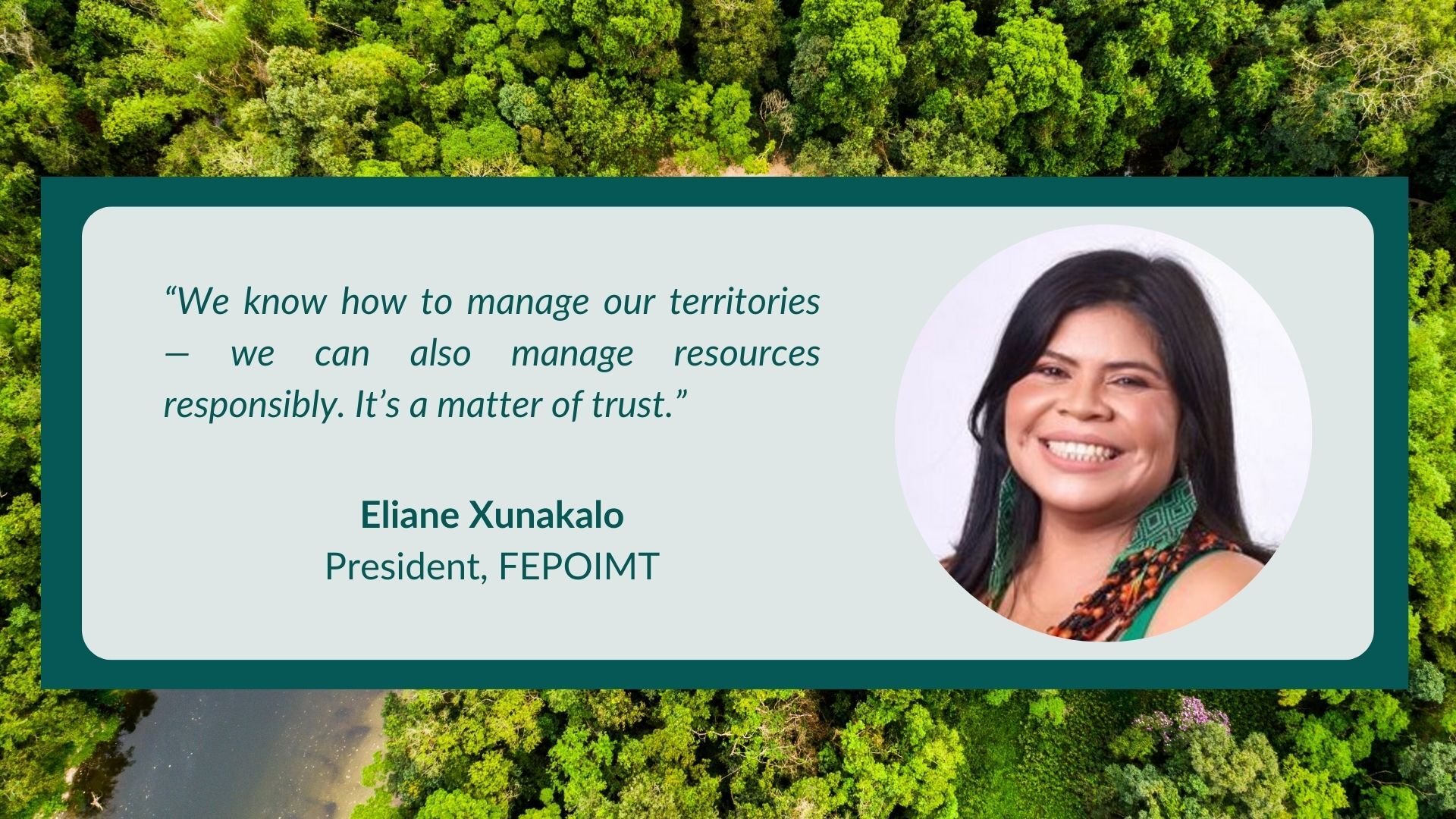
To make JREDD effective and equitable, communities must have direct access to funds through Indigenous-led organizations and mechanisms that minimize bureaucracy and enhance self-determination.
7. Brazil’s pioneering efforts offer a model for the world
Brazil’s states are charting practical pathways for high-integrity Jurisdictional REDD+, combining inclusion, accountability, and scale.
.jpg?width=1920&height=1080&name=Renata%20Nobre%20(2).jpg "Renata Nobre (2)")
Why it matters
Brazil is home to roughly 60% of the Amazon, storing over 120 billion metric tons of carbon and anchoring the planet’s climate stability.
While deforestation has declined sharply in the past year, vast areas remain under threat. Jurisdictional REDD+ offers a credible pathway to scale climate finance and deliver benefits for communities, nature, and the global climate system.
As the world turns its eyes to Belém for COP30, Brazil’s experience shows that climate solutions grounded in inclusion, integrity, and partnership can chart the way forward — for forests, people, and the planet.
Watch the full webinar recording below:
Learn more about Emergent and the LEAF Coalition
If you are a forest government or corporate business interested in learning more about Emergent and the LEAF Coalition, and our mission to end tropical deforestation, please reach out for more information: info@emergentclimate.com.